

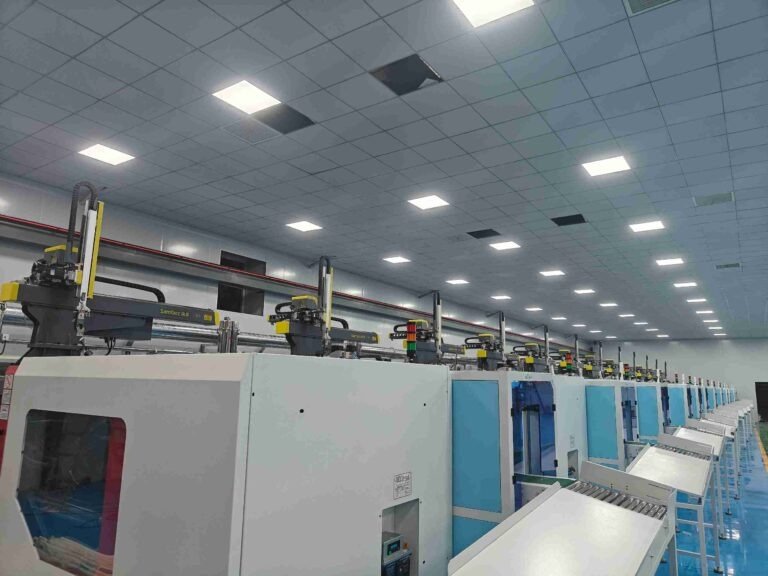
Choosing the right motion components is essential when designing or upgrading an industrial robotic arm. The servo system has a direct effect on how accurately, quickly, and reliably the robot can perform its programmed tasks.
A servo that does not match the robot’s mechanical and operational requirements can limit performance or create unnecessary maintenance problems. For this reason, engineers should evaluate several technical factors before making a selection.
Start With the Robot’s Payload
The first consideration should be the load the robotic arm needs to carry.
Payload includes not only the object being handled but also the end-of-arm tooling and other components that move with the joint.
A heavier payload generally requires greater torque, especially at joints farther from the robot’s base.
Calculate Torque Requirements
Torque determines the rotational force available from the servo.
When calculating requirements, engineers should consider:
- Payload weight
- Arm geometry
- Joint position
- Gravity
- Acceleration
- Deceleration
- Operating speed
The servo should provide sufficient capacity for normal operation while allowing an appropriate margin for changing loads and dynamic movement.
Determine Required Speed
Different automation tasks require different movement speeds.
A packaging robot may need rapid repetitive movements, while an assembly robot may prioritize precision over maximum speed.
Choosing a servo based solely on maximum RPM can therefore be misleading. The complete motion profile should be evaluated, including acceleration and deceleration.
Accuracy and Repeatability
Robotic automation often depends on repeatable positioning.
For example, a robot may need to place the same component in exactly the same location hundreds of times.
Servo systems with appropriate feedback devices can provide precise position control. However, overall robotic accuracy also depends on the mechanical structure, gearbox, controller, calibration, and programming.
Consider Feedback Resolution
Feedback devices provide information about motor position and movement.
Encoders are commonly used to measure rotational position. Higher-resolution feedback can support finer control, although the required resolution depends on the application.
Engineers should ensure that the servo’s feedback system is compatible with the robot controller.
Check Controller Compatibility
A servo motor cannot be selected independently from the rest of the control system.
The motor, drive, encoder, and controller need to communicate correctly.
Before purchasing a component, check electrical specifications, communication protocols, feedback interfaces, voltage requirements, and controller compatibility.
This is particularly important when replacing an existing servo in an established robotic system.
Operating Environment
The environment can significantly influence servo selection.
Factories may expose robotic equipment to dust, moisture, heat, vibration, chemicals, or other challenging conditions.
If the robot operates in a demanding environment, the servo and associated components should have suitable protection ratings and thermal characteristics.
Duty Cycle
Consider how frequently the robot will operate.
A servo used continuously throughout a production shift has different requirements from one used intermittently.
Duty cycle affects thermal performance and motor sizing. Engineers should evaluate continuous and peak loads rather than focusing only on short-term performance.
Energy Efficiency
Energy consumption can become significant in large automated facilities.
Efficient servo systems can help reduce unnecessary energy use by controlling motor output according to the required motion.
Energy efficiency should be evaluated together with torque, speed, control performance, and total system requirements.
Servo Arm Robots and Automation
Understanding how servo-controlled robotic arms operate can make it easier to compare different automation solutions. A robot arm servo can provide the controlled joint movement needed for applications where precision, speed, and repeatability are important.
However, servo technology is only one part of the complete robotic system. Mechanical design, controllers, sensors, software, end effectors, and safety systems all contribute to final performance.
Maintenance and Service Life
A properly selected servo can provide reliable performance for a long operating period, but routine maintenance remains important.
Maintenance teams should monitor:
- Motor temperature
- Abnormal vibration
- Positioning errors
- Encoder faults
- Cable condition
- Gearbox performance
- Unusual sounds
Early detection of problems can prevent unexpected production downtime.
Final Thoughts
Selecting a robot arm servo requires more than comparing motor power ratings. Payload, torque, speed, accuracy, feedback, duty cycle, environmental conditions, and controller compatibility all need to be considered.
When the servo system is correctly matched to the robotic arm and its application, it can provide the precise and repeatable motion required for modern industrial automation.