

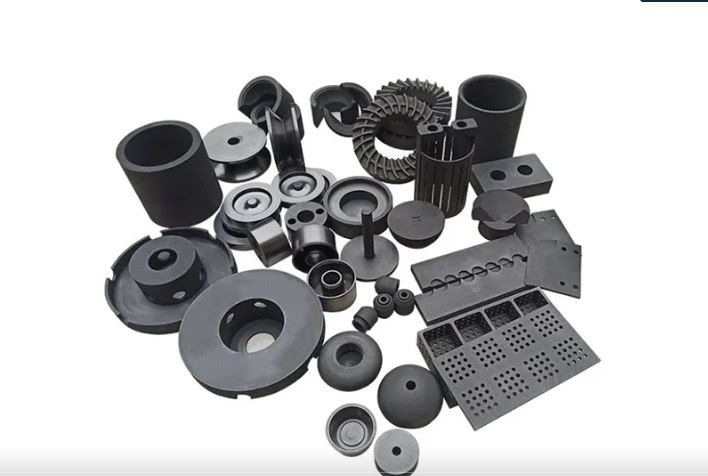
The quality of a graphite mold depends on more than the raw material. Machining accuracy, material selection, design support, inspection, and production consistency can all affect the final product.
For this reason, choosing the right supplier is an important step when sourcing graphite molds for industrial applications.
A reliable supplier should be able to understand the manufacturing process, recommend suitable graphite grades, produce components according to technical drawings, and maintain consistent quality between orders.
Look Beyond the Price
Price is naturally an important consideration, but it should not be the only factor.
A low-cost mold may become expensive if it wears quickly, fails to meet dimensional requirements, or produces inconsistent components.
Instead, evaluate the total value offered by the supplier. Consider material quality, machining accuracy, expected service life, inspection procedures, communication, and delivery reliability.
Check Graphite Material Quality
The supplier should be able to provide information about the graphite used in the mold.
Depending on the application, important specifications can include:
- Graphite purity
- Bulk density
- Grain size
- Compressive strength
- Flexural strength
- Thermal conductivity
- Electrical resistivity
- Ash content
The appropriate properties depend on the intended application.
A supplier that clearly communicates material specifications makes it easier for buyers to determine whether a particular graphite grade is suitable.
Evaluate Machining Capabilities
A custom mold is only as useful as its machining accuracy.
Ask whether the supplier has the equipment required to produce your mold geometry and tolerances. CNC machining capabilities can be particularly valuable for complex cavities and repeatable dimensions.
The supplier should also understand graphite-specific machining requirements because graphite behaves differently from many metals during machining.
Review Customization Options
Industrial projects often require molds that are not available as standard products.
A capable supplier should be able to work from:
- CAD drawings
- Engineering drawings
- Technical specifications
- Samples
- Dimensional requirements
Discuss customization before ordering so the supplier can confirm whether the requested design is practical.
Quality Control Is Essential
A mold may look correct while still having dimensional or material issues that affect production.
Ask how the supplier checks finished products. Depending on the project, quality control may include dimensional inspection, visual inspection, material verification, and other testing.
For precision applications, inspection records or measurement reports may also be useful.
Ask About Production Capacity
Production capacity becomes important when ordering multiple molds or planning long-term supply.
A supplier should be able to communicate realistic production timelines and explain how it handles repeat orders.
Consistency is particularly important when multiple molds need to perform under the same manufacturing conditions.
Consider Technical Communication
Technical communication can have a major impact on custom projects.
The supplier should understand details such as:
- Operating temperature
- Processing atmosphere
- Mold dimensions
- Tolerances
- Part geometry
- Production volume
- Expected service life
Clear communication reduces the risk of receiving a product that technically matches a drawing but does not perform well in the actual application.
Ask About Packaging and Shipping
Graphite is relatively strong in many applications, but thin or complex machined sections can still require careful handling.
Ask how finished components are packaged for transportation. Proper packaging can help reduce the risk of damage during shipping.
Delivery reliability is also important for manufacturers working with strict production schedules.
Can the Supplier Provide Other Graphite Components?
A supplier that manufactures multiple graphite products may be able to support broader industrial requirements.
For example, a project might require molds together with graphite plates, rods, crucibles, or other machined components.
Working with one experienced manufacturer can simplify sourcing and communication when several graphite products are needed.
You can also review graphite mold supplier options and related graphite products when evaluating potential suppliers.
Questions to Ask a Potential Supplier
Before placing an order, ask:
- Which graphite grades do you offer?
- Can you manufacture according to CAD drawings?
- What machining tolerances can you achieve?
- How do you inspect finished molds?
- Can you provide material specifications?
- What is your typical production lead time?
- Can you handle repeat or bulk orders?
- How are products packaged for shipping?
The answers can reveal how well a supplier is prepared to handle a specialized project.
Final Thoughts
A reliable graphite mold supplier should offer more than a competitive quotation. Material quality, machining expertise, customization, quality control, communication, and delivery all contribute to the success of a graphite mold project.
By evaluating suppliers against these factors before placing an order, manufacturers can reduce sourcing risks and build a more dependable supply chain for high-temperature graphite components.