

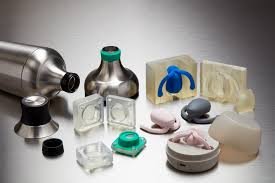
Multi-material molding techniques have quietly transformed product design across industries. Overmolding and insert molding allow engineers to combine materials with dramatically different properties — hard and soft, conductive and insulating, rigid and flexible — into a single integrated component. The result: products that perform better, assemble faster, and cost less over their lifecycle than multi-part alternatives.
The global overmolding market was valued at $6.8 billion in 2023 and is growing at 5.9% CAGR, driven by demand for ergonomic handheld devices, miniaturized electronics, and medical equipment where functional integration directly impacts patient outcomes.
Defining the Two Processes
Insert molding places a pre-formed component — typically a metal insert — into the mold cavity before injection. Plastic is then injected around it, encapsulating or partially surrounding the insert. The bond is mechanical and/or chemical depending on insert geometry and material pair.
Overmolding (also called two-shot or 2K molding in its most automated form) molds a first “substrate” material, then places that molded part into a second mold where a second material is injected over it. Both materials are plastic, though they differ in hardness, color, or chemical composition.
The key distinction: insert molding joins metal to plastic; overmolding joins plastic to plastic.
Applications Across Industries
Custom overmolded parts appear wherever ergonomics, sealing, or aesthetics demand material transitions:
• Power tools: Rigid glass-filled nylon housing overmolded with TPE soft-grip zones — reduces operator fatigue by 23% according to ergonomics studies (reported in Ergonomics International, 2022)
• Medical devices: Polycarbonate syringe bodies with TPE thumb rings — eliminates separate ring assembly, reduces assembly labor by 40%
• Automotive: Polypropylene door handles overmolded with UV-stable TPU — delivers Class-A surface finish with soft-touch feel without secondary painting
• Consumer electronics: ABS device housings with overmolded silicone port seals — achieves IP67 rating without separate gasket installation
• Industrial connectors: PBT connector bodies with integrated TPE strain relief boots — reduces assembly steps from 4 to 1
Insert Molding: Metal-to-Plastic Integration
Insert molding is the standard solution for any plastic component that needs threaded connections, electrical conductivity, or bearing surfaces:
| Insert Type | Material | Application | Advantage Over Post-Installation |
| Threaded brass inserts | C36000 brass | Screw bosses in housings | 3–5× higher pull-out strength vs. heat-set |
| Electrical contacts | Phosphor bronze / beryllium copper | Connector bodies, switches | ±0.001″ positional accuracy; no secondary assembly |
| Bearing inserts | Steel, bronze | Rotating assemblies | Eliminates press-fit operation |
| Strengthening pins | Stainless steel | Thin-wall structural sections | Load transfer without wall thickening |
| EMI shields | Copper / tin-plated steel | Electronics enclosures | Intrinsic shielding without coating step |
Pull-out strength comparison for M3 threaded connection in ABS:
• Molded-in boss (no insert): 180–220 N
• Heat-set brass insert (post-mold): 420–560 N
• In-mold brass insert (insert molding): 680–820 N
Insert molding delivers the strongest possible metal-plastic joint because the plastic flows around knurled and undercut insert surfaces during injection, creating mechanical interlock at a micro level that no post-mold installation method can replicate.
Material Compatibility: The Critical Design Variable
For overmolding, the substrate and overmold materials must be chemically compatible — otherwise the bond relies entirely on mechanical interlock from geometry, which is weaker and less reliable.
| Substrate | Compatible Overmold Materials | Bond Type |
| ABS | TPU, TPE (SEBS-based) | Chemical + mechanical |
| Polycarbonate | TPU, silicone (with primer) | Chemical + mechanical |
| Nylon (PA66) | TPE-A (polyamide-based TPE) | Chemical bond |
| Polypropylene | TPE-O (olefin-based TPE) | Chemical bond |
| POM (Acetal) | Limited options — requires mechanical interlock | Mechanical only |
POM (acetal) is notoriously difficult to overmold due to its non-reactive surface chemistry. When a POM substrate is required, design mechanical interlock features — undercuts, slots, through-holes — to achieve adequate bond strength.
Design Rules for Successful Multi-Material Injection Molding
Getting overmolding and insert molding right requires specific geometric design considerations:
• Minimum overmold wall thickness: 0.8–1.5mm for most TPEs; thinner walls don’t fully pack and show sink marks or voids
• Substrate surface preparation: Rough textures (Ra 3.2–6.3 μm) improve mechanical adhesion where chemical bonding is weak
• Insert registration: Metal inserts must be positively located in the mold — a 0.5mm positional error on a small electrical contact causes functional failure
• Gate location on overmold: Gate at the thickest overmold section; avoid gating directly onto the substrate’s parting line
• Draft on substrate: Overmold material grips the substrate — insufficient draft on the substrate makes it impossible to eject the final assembly
• Temperature differential: The overmold injection temperature must not degrade the substrate; PC substrates limit overmold barrel temperatures to ~280°C
Cost Impact: Integration vs. Assembly
| Design Approach | Components | Assembly Steps | Per-Unit Cost (at 200K/yr) |
| Separate parts + assembly | 4 | 6 | $3.85 |
| Overmolded single part | 1 | 1 | $2.10 |
| Insert-molded assembly | 2 | 2 | $2.45 |
| Savings vs. separate assembly | — | 67–83% fewer | $1.40–$1.75 savings/unit |
At 200,000 units/year, that per-unit savings translates to $280,000–$350,000 in annual cost reduction — typically recovering the overmold tooling premium ($15,000–$40,000) within the first production month.
Beyond direct cost savings, multi-material injection molding eliminates tolerance stack from multi-part assemblies, improves reliability by removing fasteners and adhesives that can loosen or degrade, and enables product geometries — like seamlessly sealed housings — that are simply not achievable with discrete assembly.
SSPrecision Is a Trusted Partner for Die Manufacturing Cost Optimization
SSP Precision is an ISO 9001 & IATF 16949 certified manufacturer delivering end-to-end precision solutions, from design and prototyping to high‑volume production, for the automotive, medical, electronics, aerospace, and industrial sectors. We handle every stage in‑house – DFM engineering, rapid prototyping, CNC machining, EDM, grinding, and global logistics – to manufacture the tooling that makes your parts and the parts themselves.
What we build and supply: visit our sites: https://ssprecision.com.cn/
- Stamping dies manufacturing and stamping die parts – high‑precision transfer stamping dies and progressive/compound dies for volume metal stamping.
- Injection molding and injection mold – custom injection molds for plastic components, including single‑, multi‑cavity, and over‑molding & insert‑molding tools that combine metal and plastic in one part.
- Specialty molded components – eco‑friendly green mold parts and microscopic medical micro‑molded parts.
- Precision metal and plastic end‑use parts – high‑volume serial production of precision products (metal stampings, plastic moldings) with full PPAP traceability.
Tooling spare parts manufacturing & – tooling spare parts (punches, inserts, ejector pins) and precision robotics spare parts to keep your production running.