

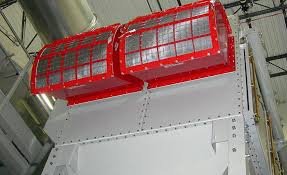
Combustible dust explosions are not rare industrial accidents — they are predictable, preventable events that occur in facilities that fail to engineer adequate protection into their dust collection systems. The U.S. Chemical Safety Board documented 281 combustible dust incidents between 2006 and 2022, resulting in 119 fatalities and 718 injuries. Wood dust, metal powder, grain, sugar, and plastic — among the most common industrial materials — are all combustible at particle sizes below 420 microns, the threshold defined by NFPA 654.
An explosion proof dust collector is not simply a standard unit with a different label — it is a system-level engineering solution incorporating specific design features mandated by OSHA and NFPA standards. Non-compliance exposes facilities to OSHA citations up to $156,259 per willful violation plus unlimited civil liability in the event of an incident.
The Regulatory Framework: OSHA and NFPA Requirements
OSHA’s approach to combustible dust safety is grounded in the General Duty Clause (Section 5(a)(1)) and references the NFPA National Fire Protection Association family of standards as the recognized engineering benchmark. Three NFPA standards govern explosion proof dust collector design:
• NFPA 654 (Prevention of Fire and Dust Explosions from the Manufacturing, Processing, and Handling of Combustible Particulate Solids): governs dust collector location, design requirements, and housekeeping. Key mandate: dust collectors handling combustible dust must be located outside the building, or if inside, must be equipped with explosion venting to the exterior or chemical suppression systems.
• NFPA 68 (Standard on Explosion Protection by Deflagration Venting): specifies how to size explosion vent panels. Vent area calculation uses the dust Kst value (deflagration index), collector volume, and design reduced pressure (Pred) that the collector structure can withstand.
• NFPA 69 (Standard on Explosion Prevention Systems): governs chemical suppression, oxidant concentration reduction, and deflagration pressure containment as alternatives to venting — required when outdoor venting is not feasible.
The Five Mandatory Design Features
An OSHA-compliant explosion proof dust collector for combustible dust service must incorporate all five of the following engineering features:
| Required Feature | NFPA Standard | Design Specification | Consequence of Omission |
| Explosion vent panels | NFPA 68 | Sized per Kst, volume, Pred calculation | Container rupture, structural damage |
| Rotary airlock (inlet/outlet) | NFPA 654 §7.8 | Rated for explosion pressure, isolates hopper | Flame propagation to connected equipment |
| Fast-acting isolation valve | NFPA 654 | < 100ms response, installed at duct entry | Deflagration propagation back through ductwork |
| Grounding and bonding | NFPA 77 | < 1 ohm resistance to ground, all conductive parts | Static discharge ignition in dry conditions |
| Anti-static filter media | NFPA 654 | Conductive fibers in bag/cartridge, grounded | Electrostatic charge buildup on filter bags |
Explosion Vent Sizing: The Critical Calculation
Correctly sizing explosion vent panels is the most technically demanding aspect of OSHA dust collector requirements compliance. Under-sized vents fail to adequately relieve explosion pressure, allowing the reduced pressure (Pred) to exceed the collector’s structural design pressure — causing catastrophic container failure. Over-sized vents waste money and may create structural weakness.
The NFPA 68 calculation procedure requires four inputs: the dust Kst value (bar·m/s), the collector volume (m³), the static activation pressure of the vent (Pstat in bar), and the allowable design reduced pressure (Pred in bar). For a typical pulse-jet collector handling wood dust (Kst = 200 bar·m/s) with a 6 m³ volume and structural design pressure of 0.2 bar, NFPA 68 calculations yield a required vent area of approximately 1.4–1.8 m². All vent panels must discharge to unoccupied exterior areas via flame-front diverters where direct outdoor discharge is not possible.
Location Requirements: Indoor vs. Outdoor Placement
• NFPA 654 strongly prefers outdoor placement of dust collectors handling combustible dust — outdoor location eliminates the need for indoor explosion venting infrastructure and reduces secondary explosion risk from dust disturbed by a primary event
• Indoor placement requires: explosion venting to exterior (min. 1.4 m² free area per 6 m³ volume for wood dust), ductwork isolation valves, and emergency shutdown integration with the facility’s fire alarm system
• Minimum outdoor setback: NFPA 654 recommends minimum 6-meter (20-foot) clearance from building openings, personnel areas, and ignition sources when outdoor vents are directed toward structures
Case Study: Food Ingredient Facility — $0 Incident Cost After Compliance Retrofit
A sugar processing facility in Louisiana received an OSHA citation after a compliance audit identified missing explosion vent panels and ungrounded filter bags on three indoor pulse-jet dust collectors. Citation penalty: $87,500. Compliance retrofit — including NFPA 68-calculated vent panels, fast-acting duct isolation valves, and anti-static filter bag replacement — cost $62,000 installed across all three units. Eighteen months after retrofit, a malfunctioning pneumatic transfer system ignited sugar dust inside one collector. The explosion vents activated correctly, the isolation valves closed within 80 milliseconds, and the deflagration was fully contained within the collector housing. Zero injuries. Zero structural damage. The $62,000 compliance investment prevented a potential $2–15 million loss.
| Dust Type | Kst (bar·m/s) | MEC (g/m³) | NFPA Classification | Min. Vent Area (6 m³ collector) |
| Wood dust | 200–220 | 40–60 | ST-1 | 1.4–1.8 m² |
| Grain/flour | 150–200 | 50–80 | ST-1 | 1.2–1.6 m² |
| Aluminum powder | 310–420 | 30–50 | ST-2 | 2.4–3.2 m² |
| Plastic (polyethylene) | 120–180 | 40–60 | ST-1 | 0.9–1.4 m² |