

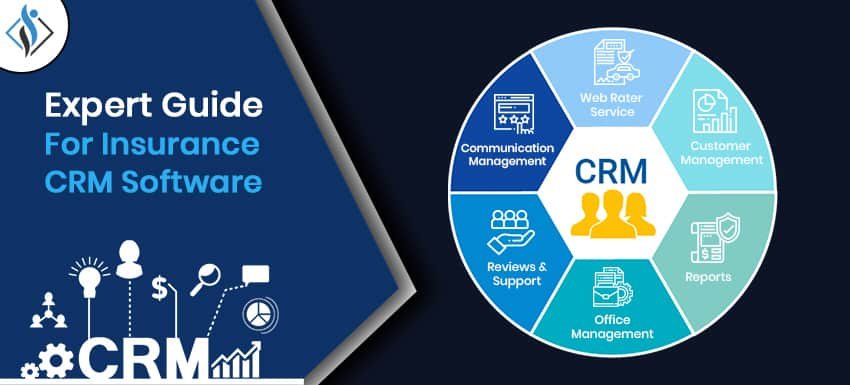
The insurance industry has already entered into the digital-first era, where speed, personalization, and data-driven service successfully define greater success. In fact, 74% of insurers have already prioritized digital transformation and latest technology adoption in 2025, which highlights how quickly this insurance sector is shifting towards smarter digital systems as well as customer-centric business operations.
As policyholders are also increasingly expecting instant quotes, faster claims, and personalized assistance for claims, the traditional manual processes are no longer sustainable. This is where a modern CRM for insurance becomes a vital technology.
Today’s CRM solutions are designed to support the entire insurance lifecycle. Hence, it is proven that adopting the right CRM is no longer optional, but rather a strategic necessity for better and sustainable growth.
What is a CRM for Insurance?
An insurance CRM system is an advanced technology platform that is particularly designed to help insurance companies manage customer relationships, policies, different claims, and sales activities, all under a single centralized system.
From providing a 360-degree view of policyholders, the software enables insurers to easily streamline business operations while automating workflows and delivering different personalized services throughout the entire insurance lifecycle.
| Aspect | General CRM | Insurance-Specific CRM |
| Industry Focus | A general CRM is designed for multiple industries | It is developed particularly for insurers, brokers, and leading agencies |
| Data Management | It helps managing general customer contact and proper sales data | Stores different policy details, proper claims history, and insurance documentation |
| Workflow Automation | It works for sales and marketing automation | It also automates policy issuance, renewals, underwriting |
| Compliance & Regulations | The tool meets limited industry compliance features | Insurance-specific CRM assists with proper insurance regulatory and compliance management |
| Customer Lifecycle | Focuses on lead conversion and customer communication | Supports complete insurance lifecycle including policy and claims management |
| Analytics | Basic customer and sales insights | The insurance-specific analytics such as policy performance and proper risk insights |
Usually, a generic CRM system mainly focuses on managing leads and customer communications across different industries.
Comparatively, a specialized insurance CRM platform is tailored to deal with the complex workflows of insurers. It centralizes the proper policyholder data while automating certain administrative tasks and provides deeper insights into genuine customer interactions.
Key Stakeholders Using CRM in Insurance Companies
While planning for an insurance CRM software development, there are multiple professionals within an insurance organization, and it also allows for managing different operations efficiently.
- Insurance Agents
Agents use the best and most modern CRM platforms to easily track leads, manage genuine customer interactions, generate proper quotes, and follow up with potential policyholders. This helps increase different policy sales.
- Brokers
Insurance brokers rely on modern CRM systems, which allow them to manage multiple client policies and compare certain coverage options. Such systems also help maintain strong relationships with policyholders.
- Underwriters
Underwriters opting for the latest insurance CRM integrations can properly access customer profiles, risk information, and policy history. These help them assess certain risks while determining accurate premiums.
- Claims Managers
Claims teams also use the latest CRM systems to monitor different claim requests, track claim progress while communicating with policyholders, and streamline certain settlement workflows.
How CRM supports the insurance lifecycle (lead → policy → claims → renewals)
A modern insurance CRM platform also supports the entire insurance journey by connecting each stage of the customer lifecycle:
Lead Generation → Policy Issuance → Claims Management → Policy Renewals
CRM systems usually capture leads from various channels and convert them into policyholders. They can also manage policy details, track different claims, and automatically send renewal reminders.
Furthermore, by integrating all these processes into a unified platform, insurers can successfully improve operational efficiency while enhancing overall customer satisfaction and driving retention.
Why Insurance Companies Need a CRM System
The modern insurance market is increasingly becoming more competitive. In fact, 63% of insurers have already digitized their business claim operations by 2025. This number strongly reflects the industry’s rapid shift toward data-driven platforms while automating workflows.
- Growing Customer Expectations
These days, policyholders expect faster responses and personalized insurance plans that actually streamline their seamless digital experiences. This is where an advanced CRM for insurance ensures real-time support, tracks customer interactions, and tailors multiple policy offerings based on customers’ needs.
- Complex Insurance Processes
Complex insurance processes also involve certain business operations where businesses need to deal with proper policy issuance, certain renewals, and claims processing. An innovative CRM software also helps centralize these workflows by handling large volumes of data and reducing the need for manual tasks and certain operational errors.
- Sales & Customer Retention Challenges
Due to the rising competition in the modern insurance sector, keeping the policyholders strongly attached has become very difficult. Insurance automation software also helps insurers to manage leads properly while tracking proper sales pipelines and automating follow-ups.
- Regulatory Compliance
Insurance companies need to comply with the strict industry regulations with complete data protection, reporting, and overall financial transparency. In such cases, a robust CRM system helps maintain greater compliance by storing proper customer information and maintaining audit trails.
- Data-Driven Decision Making
Modern insurers usually rely heavily on data analytics to properly understand customer behavior, policy performance, and certain risk trends. A CRM for insurance provides such advanced dashboards and latest reporting tools that transform raw data into actionable insights.
Key Features of CRM for Insurance
Most of the insurers these days are looking for advanced digital tools that help manage customers, insurance policies, and certain operational workflows. An insurance CRM platform integrated with certain exclusive features also helps insurers streamline multiple business operations while enhancing overall productivity in this competitive digital insurance landscape.
The growing demand for such solutions is also evident because in 2025 the global CRM market was valued at about $112.9 billion, and now it is expected to reach $126.1 billion in 2026, driven by increasing adoption of multiple industries, including insurance.
- Lead Management
Lead management tools usually help insurers capture leads from different websites, referral programs, and multiple digital campaigns. However, because of this growing adoption of AI in insurance, CRM platforms can also successfully automate multiple follow-ups and engage potential customers faster and more effectively.
- Contact & Customer Management
An advanced CRM system centralizes customer information and gathers their detailed profile. From contact details, certain policy records, and interaction history, such tools support leading agents and teams to access complete details of each of the policyholders. This improves communication, superior service quality, and ensures relationship management across different policies.
- Sales Pipeline Management
From initial lead to policy purchase, the sales pipeline tools also allow insurers to easily track different opportunities. Hence, they can generate quotes and send proposals while monitoring deal progress. These tools also improve overall agent productivity while prioritizing high-value prospects with close policies faster.
- Policy Administration
Policy administration features streamline the creation and proper management of insurance policies. Latest CRM systems automate renewal reminders with scheduled premium billing and track agent commissions. This also reduces the chances of certain administrative workload while ensuring policies are managed accurately.
- Claims Management
Claims management tools allow insurers to streamline certain claim submissions, track proper claim status, and automate certain settlement workflows. By integrating certain specialized systems, such as insurance claim management software development, insurers can also reduce processing time with improved transparency.
6. Marketing Automation
Marketing automation also enables insurers to run some targeted campaigns through proper segmentation and the latest customer data insights. Also, these platforms support automated email, SMS, and multi-channel campaigns, which allow insurers to nurture leads. The system also assists with handling new policies and helps maintain genuine engagement with new and existing customers.
7. Customer Self-Service Portal
While opting for insurance CRM software development, customer self-service portals allow policyholders to properly update their personal details, download different policy documents, track up-to-date claims, and pay premiums online. These digital portals can successfully improve convenience for customers while reducing the additional workload for support teams and insurance agents.
8. Analytics & Reporting
Advanced analytics tools also provide real-time dashboards, proper revenue forecasts, and the latest customer behavior insights. These capabilities allow insurers to monitor proper sales performance, analyze certain policy trends, and make strategic decisions that improve overall customer retention and business growth using the advanced insurance automation software.
Essential CRM Integrations for Insurance Companies
Modern insurance companies increasingly depend on connected digital ecosystems to manage complex operations efficiently. According to recent industry research, 82% of insurance companies consider AI and advanced digital platforms to be vital for their future growth, highlighting the rapid shift toward certain integrated technology systems.
- ERP Systems
ERP integration seamlessly connects CRM with certain financial and operational systems that enable insurers to easily manage proper accounting, procurement, and complete resource planning efficiently. This integration also helps CRM solutions for insurance industry to properly maintain consistent financial data across multiple departments.
- Policy Management Systems
Integrating CRM with the latest policy management platforms also enables automatic policy creation, proper updates, and complete renewals. This also allows agents to access complete policy details instantly while improving seamless coordination between sales teams and certain policy administration departments.
- Claims Management Platforms
Claims management integration also ensures real-time synchronization with proper claim data handling between different systems. Insurers with this seamless integration can also successfully streamline claim processing with settlement workflows. This, as a result, improves better transparency while accelerating resolution times.
- Underwriting Systems
CRM integration with underwriting platforms also enables better risk evaluation by providing underwriters with accurate customer history, previous policies, and also handling claim data. This also helps insurers make faster and more accurate calculations for the premium amounts.
- Marketing Automation Tools
Marketing automation platforms when integrated with CRM allow insurers to run some targeted campaigns, nurture leads with personalized customer communications. Such autoamtion tools support complete segmentation and ensure seamless automation of multiple tasks with the innovative insurance automation software.
- Document Management Systems
Document management systems allow insurance companies to securely store and retrieve policy documents and all claim records. Therefore, teams can easily maintain organized documentation while improving compliance and operational efficiency.
- Customer Portals & Mobile Apps
CRM integration with the modern customer portals and mobile applications allows policyholders to access certain policy information. This integration also assists with handling claims while tracking proper claim status. This also makes payments convenient through such digital self-service platforms.
- Accounting and Billing Software
Integrating the latest CRM with the latest accounting and billing software also ensures accurate premium invoicing, payment tracking, and financial reporting. When insurers opt for such advanced insurance software development services, they can also successfully streamline certain billing operations with improved financial transparency.
Benefits of CRM for Insurance Businesses
When it comes to implementing a robust insurance CRM software solution, it is considered more than a technological upgrade, but a strategic investment. It also successfully reshapes how insurance agencies engage with multiple clients, manage operations, and grow their business sustainably.
Studies also show that CRM implementation can improve customer retention by up to 27%. This data strongly reflects how it helps with customer engagement and better operational efficiency.
- Improved Customer Experience
A CRM helps agents to properly understand a policyholder’s history, certain preferences, and their premium details. This allows them to take part in personalized communication with proactive services. The CRM also builds deeper relationships that drive genuine customer loyalty and better customer engagement.
- Increased Sales and Lead Conversion
An innovative insurance CRM system helps insurers manage leads and monitor sales pipelines. Furthermore, by using the advanced CRM software, agents can also deliver accurate quotes faster, which increases the chances of generating leads.
- Faster Claims Processing
Claims handling becomes easier and more efficient when agents implement a modern CRM for handling different insurance claims integrated with their existing business systems. Using insurance automation software, companies can successfully automate proper claim submissions and track claim status while accelerating their approvals.
- Improved Agent Productivity
Due to the modern CRM software, insurance agents don’t need to juggle their work between multiple systems or waste their time on manual data entry. With the help of modern CRM software for insurance, they can easily take part in different routine tasks, for example, sending follow-up emails, scheduling certain reminders, and updating contact records.
- Better Data Insights and Analytics
With centralized data and using powerful analytics tools, businesses can successfully gain a deeper understanding of what things are working and what needs improvement. Whether it’s about identifying top-performing agents or analyzing customer demographics, the smart CRM software supports smarter and more informed decision-making.
- Reduced Operational Costs
Automating multiple routine tasks through the advanced CRM software also significantly lowers different operational expenses. Furthermore, by implementing an advanced and scalable insurance CRM system, companies can also successfully minimize their pressure for doing paperwork while reducing the chances of manual errors. This results in a reduction of operational costs across multiple departments.
Best CRM Platforms for Insurance Companies
Choosing the right insurance CRM platform is considered highly essential for insurers aiming to streamline certain business operations while managing genuine customer relationships and automating policy management.
Furthermore, such modern CRM tools integrating some advanced features also help insurers manage the complete customer lifecycle efficiently.
- Salesforce Financial Services Cloud
Salesforce Financial Services Cloud is considered one of the most powerful CRM solutions. The software is particularly designed for financial institutions and insurers. It unifies customer data from multiple systems and supports personalized engagement.
Key Features
- AI-driven customer insights and automation
- Unified customer data platform
- Advanced analytics and reporting
- Strong integration ecosystem
Salesforce generated $37.9 billion in revenue in fiscal 2025 and serves more than 150,000 global customers, making it the largest CRM provider worldwide.
- Microsoft Dynamics 365
Microsoft Dynamics 365 also combines both CRM and ERP capabilities in a modern and unified platform. Known as an innovative insurance CRM system, this helps insurers manage certain customer interactions while automating sales processes and gaining predictive insights.
Key Features
- Integrated CRM and the latest ERP ecosystem
- Predictive analytics and proper forecasting
- Centralized customer data dashboards
- Seamless integration with Microsoft tools
Microsoft Dynamics 365 CRM recorded 23% revenue growth in FY2025 and holds about 5.2% of the global CRM market share, highlighting strong enterprise adoption.
- Zoho CRM
Zoho CRM is another software used by multiple insurance agencies. It also provides the latest automation, omnichannel communication, and proper AI-powered insights on certain aspects of insurance claims.
Key Features
- Seamless sales process automation
- Omnichannel communication tools
- AI-powered sales predictions
- Customizable workflows
Zoho CRM is rapidly expanding in the modern CRM ecosystem, where global CRM spending exceeded $53 billion annually.
- HubSpot CRM
HubSpot CRM is also widely adopted because of its user-friendly interface and powerful marketing automation. Using this software, insurance businesses can successfully generate leads, automate marketing campaigns, and track genuine customer interactions.
Key Features
- Marketing automation and lead nurturing
- Pipeline and deal tracking
- Email marketing and customer engagement tools
- Detailed analytics dashboards
HubSpot remains one of the best and fastest-growing CRM providers as businesses increasingly adopt integrated marketing and sales platforms. It improves customer engagement and certain digital sales strategies.
- LeadSquared
LeadSquared is another reliable insurance CRM system, designed specifically for high-volume sales environments. The software also helps insurance teams capture genuine leads from multiple channels and distribute them automatically.
Key Features
- Lead capture and distribution automation
- Agent performance tracking
- Field sales management
- Proper and real-time sales analytics
LeadSquared has been widely adopted by insurance and financial services sales teams. It helps manage a large volume of data while automating customer acquisition and different sales operations.
Key Factors to Consider When Choosing an Insurance CRM
Not all CRM solutions are the same. Hence, when you need to select the advanced CRM software for your insurance business, you need to consider some critical aspects that align perfectly with your current needs and with your future goals.
- Industry-Specific Features
An effective CRM should usually include certain insurance-specific capabilities, for example, policy management, proper claims tracking, underwriting support, and renewal automation. Industry-focused functionalities also ensure that insurers can successfully manage the entire policy lifecycle efficiently while supporting broader initiatives related to digital transformation in insurance.
- Integration Capabilities
Insurance businesses also need to operate with multiple platforms. These include handling certain policy management systems, underwriting tools, and dealing with the latest claims platforms. In such cases, a robust insurance automation software also support seamless integrations and ensure consistent data flow.
- Scalability and Customization
As insurance companies grow with time, the modern CRM must also support the growing demand for increasing policyholders, agents, and different operational processes. A scalable CRM system also allows insurers to expand multiple services while adding new digital capabilities. These help them manage larger volumes of customer and policy data.
- AI and Automation Features
Artificial intelligence and the latest automation features also help insurers improve operational efficiency. AI-powered CRM tools automate proper lead scoring, claims processing, and genuine customer interactions. These assist insurers in reducing manual workloads while improving overall service response times.
- Data Security and Compliance
Insurance companies also need to manage sensitive customer and financial data. An insurance CRM system must have certain strong security protocols, such as data encryption, role-based access control, and regulatory compliance features. All these help protect policyholder information while maintaining overall trust.
- Ease of Use and Training
A user-friendly CRM interface also helps insurance agents and employees adopt the innovative system quickly. From simple navigation to handling intuitive dashboards, the software must enable teams to work efficiently. Hence, there is no requirement for extensive training or technical expertise.
- Total Cost of Ownership
Organizations also need to evaluate the total cost of ownership when selecting the right insurance CRM software development. This includes proper licensing, customization, and overall maintenance costs. However, choosing the right CRM also ensures that insurers successfully gain long-term value while improving operational efficiency and latest customer service capabilities.
Implementation Best Practices for Insurance CRM
Successful CRM deployment requires proper planning, strategic execution, and continuous optimization. A well-implemented CRM for insurance helps insurers streamline multiple business operations with improved service delivery. Furthermore, by leveraging the advanced software, companies can also successfully ensure smooth implementation while maximizing business efficiency, better scalability, and long-term business value.
- Define Requirements
Before any implementation, insurers need to clearly define their business goals, operational needs, and overall user requirements. Furthermore, by identifying certain workflows, customer data structures, and seamless integration also needs to ensure that the CRM system properly aligns with organizational objectives for the best insurance operations.
- Choose Cloud vs On-Premise
Before opting for seamless insurance CRM integrations, organizations need to decide between cloud-based or on-premise CRM deployment. Modern cloud solutions provide better scalability, remote accessibility with faster updates. But the on-premise systems offer greater control over infrastructure and sensitive data management.
- Data Migration
Migrating accurate data into a new CRM always requires careful planning. This helps maintain greater accuracy and consistency. Insurers should also focus on cleaning, validating, and structuring customer and policy data before opting for migration. This, as a result, prevents the chances of data duplication.
- Employee Training
CRM solutions for insurance industry should also assist with proper employee training. Hence, insurance agents, brokers, and support teams can successfully understand how to use the modern CRM tools effectively. While the training programs improve system adoption, they also enhance productivity and help teams leverage automation.
- KPI Monitoring
After implementation, it is necessary for the insurers to track performance using certain key metrics. These include proper lead conversion rates, claim processing time, and customer retention. Continuous KPI monitoring also helps organizations to properly identify certain improvement opportunities while optimizing seamless CRM performance.
How A3Logics Can Help Build Insurance CRM Solutions?
Most of the insurance companies these days expect to have advanced technology partners to successfully implement modern CRM platforms. By opting for digital transformation services from A3Logics, insurers can successfully modernize their legacy systems while automating workflows and building scalable digital ecosystems.
With superior expertise in enterprise software development, AI, and data analytics, A3Logics also enables insurers to successfully deploy modern and powerful CRM solutions. Hence, they successfully streamline certain business operations while enhancing genuine customer engagement.
Our Expertise
- Custom CRM Development
A3Logics can provide advanced and tailored solutions for insurance CRM software development. These solutions also support proper policy management, complete lead tracking, and customer engagement. These help insurers manage the entire policy lifecycle more efficiently.
- CRM Integrations
The team also integrates the latest insurance CRM system with multiple policy administration platforms, underwriting tools, and claims systems. This ensures seamless data flow while improving overall coordination between departments.
- AI Automation
By leveraging certain advanced technologies such as machine learning and predictive analytics, A3Logics also helps insurers implement modern intelligent automation. Their solutions also perfectly align with emerging trends in artificial Intelligence while supporting innovations highlighted in AI in insurance.
Services Offered
A3Logics is also committed to providing end-to-end CRM services. This includes proper consulting, custom development, CRM migration, and data analytics implementation. These capabilities also help insurers transform large volumes of operational data into actionable insights, which assist in better decision-making.
Why Choose A3Logics
With over two decades of experience in digital transformation and enterprise software development, A3Logics successfully delivers scalable, secure, and user-focused solutions. Having expertise in insurance CRM software development, their team of technology experts also helps insurers modernize certain legacy infrastructure, adopt automation, and develop future-ready CRM platforms that successfully drive efficiency with sustainable growth.
Conclusion
As the insurance industry is evolving rapidly, adopting an advanced CRM technology has become essential for insurers. A well-implemented CRM for insurance enables companies to streamline proper policy management while improving claims handling and strengthening policyholder relationships.
Furthermore, by leveraging automation and analytics, insurers can enhance operational efficiency and deliver personalized services. Hence, partner with a reliable team for insurance CRM software and remain competitive in such an increasingly competitive digital insurance ecosystem.