

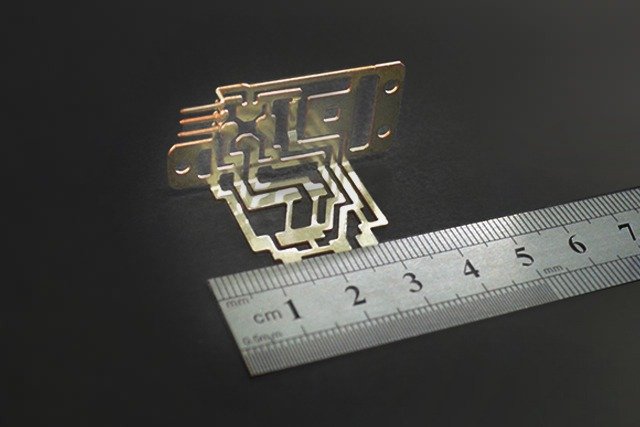
Metal stamping is one of the most established methods for manufacturing components in large quantities. It can produce parts by cutting, bending, drawing, and forming sheet metal using presses and dies.
However, the material used for stamping can significantly influence the final component’s performance.
In applications where magnetic behavior must be minimized or controlled, manufacturers may use materials specifically selected for their non-magnetic characteristics. This creates some important differences between general metal stamping and non-magnetic stamping.
What Is Traditional Metal Stamping?
Traditional metal stamping is a broad manufacturing category covering many types of metal forming.
Depending on the application, manufacturers may stamp steel, stainless steel, aluminum, copper, brass, and various specialized alloys.
The process can include operations such as:
- Blanking
- Piercing
- Bending
- Forming
- Drawing
- Embossing
The material is selected primarily according to the component’s mechanical and environmental requirements.
What Makes Non-Magnetic Stamping Different?
The basic stamping process can be similar, but material selection becomes a critical consideration.
Non-magnetic stamping focuses on alloys that have little or controlled magnetic response for the intended application.
This can be important for components used around sensitive electronic equipment, sensors, instrumentation, and specialized electrical systems.
A suitable non-magnetic stamping process can produce components while helping meet specific magnetic-performance requirements.
Material Selection
Traditional stamping frequently uses carbon steel because it provides strength, availability, and cost advantages.
However, carbon steel is generally ferromagnetic.
For applications where magnetic interference is undesirable, manufacturers may instead consider copper, brass, aluminum, or appropriate non-magnetic alloys.
The best option depends on more than magnetic properties. Strength, conductivity, corrosion resistance, hardness, weight, and forming behavior must also be considered.
Precision
Both traditional and non-magnetic stamping can achieve high dimensional consistency when suitable tooling and process controls are used.
However, the properties of different materials can affect forming behavior.
Material hardness, thickness, springback, ductility, and work-hardening characteristics can influence tool design and production parameters.
This is why tooling should be developed specifically for the selected material.
Electrical Applications
Non-magnetic materials are particularly useful when electrical conductivity or controlled magnetic behavior is required.
Copper and copper alloys can be used for electrical contacts, terminals, connectors, and related components.
Traditional steel stamping may be more appropriate for structural components where magnetic properties are not an important consideration.
Corrosion Resistance
Material selection also influences corrosion resistance.
Aluminum, copper alloys, stainless steels, and specialized materials can offer different levels of resistance depending on the environment.
If the stamped component will be exposed to moisture, chemicals, salt, or temperature changes, environmental conditions should be included in the material selection process.
Cost Considerations
Non-magnetic alloys can have different material costs compared with conventional stamping metals.
However, material price should not be the only factor considered.
A component that requires controlled magnetic properties may justify the use of a specialized alloy because using a cheaper material could create performance problems in the finished application.
Tooling costs, production volume, finishing, inspection, and material waste should also be included when calculating total manufacturing cost.
Tooling Requirements
Different metals can require different tooling approaches.
The die must account for material thickness, hardness, springback, forming behavior, and expected production volume.
A stamping tool designed for one material may not perform optimally when the material is changed without appropriate engineering adjustments.
Applications
Traditional metal stamping is used across industries such as automotive, appliances, construction, electronics, and general manufacturing.
Non-magnetic stamping is more specialized and may be relevant to:
- Electronics
- Medical equipment
- Electrical systems
- Sensors
- Laboratory equipment
- Precision instrumentation
- Specialized industrial machinery
How to Choose Between Them
The decision should begin with the component’s functional requirements.
Ask whether magnetic properties could affect the final product. If they can, material selection becomes a major engineering consideration.
Next, evaluate strength, conductivity, corrosion resistance, weight, dimensional requirements, production volume, and cost.
This approach helps manufacturers select a material and stamping process based on actual performance requirements rather than choosing solely by price.
Final Thoughts
Non-magnetic stamping is not necessarily a completely different manufacturing process from conventional metal stamping. The major distinction is the careful selection and control of materials when magnetic behavior is an important requirement.
Both approaches can provide efficient, repeatable component production when the correct material, tooling, and process parameters are used.
For specialized applications, working with a manufacturer experienced in non-magnetic stamping can help ensure that material characteristics and manufacturing requirements are properly aligned.