

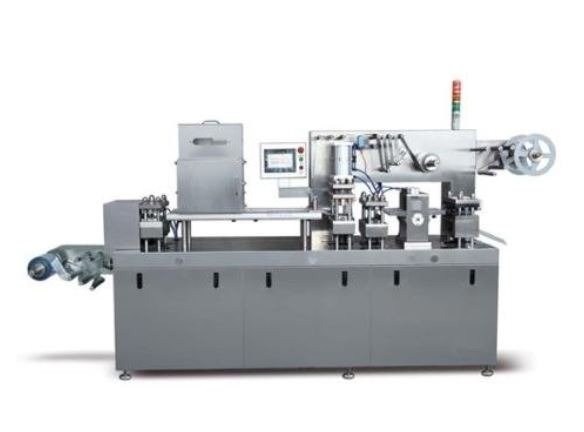
Packaging technology continues to evolve as manufacturers look for better efficiency, greater flexibility, and more reliable quality control. Blister packaging is no exception.
Modern blister lines are increasingly designed around automation, digital controls, inspection technologies, flexible production, and improved process monitoring. These developments are helping manufacturers create more consistent packages while reducing manual intervention.
Greater Automation
Automation is one of the most important developments in modern packaging machinery.
A contemporary blister packing machine can combine multiple stages, including material feeding, forming, product loading, sealing, coding, inspection, and cutting.
Automating these repetitive processes can reduce manual variation and improve production consistency.
Smarter Process Control
Modern machines commonly use programmable controls and human-machine interfaces to manage production parameters.
Operators can monitor settings such as speed, temperature, timing, and machine status from a central interface.
Recipe management can also make it easier to switch between established packaging formats while maintaining consistent settings.
Automated Inspection
Inspection technology is becoming increasingly important in pharmaceutical packaging.
Vision systems and sensors can check whether products are correctly positioned and whether the finished blister meets specified quality requirements.
Automated visual inspection can identify defects before the package moves to downstream processes.
This can reduce the risk of defective products reaching later stages of the packaging line.
Flexible Production
Manufacturers increasingly need to handle multiple products and packaging formats.
This makes quick changeovers and flexible tooling valuable features.
Flat-plate systems, for example, can offer practical flexibility for different formats, while other machine designs may prioritize continuous high-speed production.
The right configuration depends on whether a manufacturer prioritizes flexibility, speed, or a balance of both.
Improved Product Protection
Blister packaging can provide individual protection for tablets, capsules, and other products.
Thermoformed packaging can provide visibility, while cold-formed aluminum structures can offer stronger barrier protection against environmental factors such as moisture, oxygen, and light.
Manufacturers can therefore select the packaging approach based on the sensitivity of the product.
Integration With Other Equipment
Modern packaging lines do not always operate as isolated machines.
Blister equipment can be integrated with upstream production equipment and downstream systems such as cartoners and case-packing equipment.
This creates a more continuous production flow and can reduce manual product handling.
Better Data Visibility
Digital controls can also provide manufacturers with more information about machine performance.
Production data can help operators identify downtime, monitor operating conditions, and recognize recurring problems.
Over time, this information can support maintenance planning and process improvement.
Focus on Maintenance
Downtime can be expensive in a production environment.
Modern machine designs increasingly focus on easier access to components, simplified cleaning, and straightforward maintenance procedures.
Predictable maintenance can help reduce unexpected interruptions and support more stable production schedules.
Sustainability Considerations
Packaging manufacturers are also paying greater attention to material efficiency and waste reduction.
Accurate forming and cutting can help reduce unnecessary material waste. Better process control can also help minimize rejected packs caused by incorrect settings or inconsistent production.
Material selection remains an important part of sustainability because the environmental impact depends on the complete packaging system, not only the machine.
Choosing Technology Based on Application
Not every manufacturer needs the most automated or highest-speed system available.
A small producer with frequent product changes may benefit more from flexibility and easy setup than maximum output.
A large pharmaceutical facility may prioritize high throughput, automated inspection, integration, and continuous production.
The best machine is therefore the one that matches the actual production requirements.
What to Look for in a Modern Machine
When evaluating new equipment, manufacturers should consider:
- Automation level
- Production capacity
- Forming technology
- Product feeding
- Sealing control
- Inspection systems
- Changeover time
- Material compatibility
- Cleaning access
- Data and control features
- Integration capabilities
These factors can help determine whether a machine is suitable for both current and future production needs.
Conclusion
The modern blister packaging industry is moving toward greater automation, smarter inspection, flexible production, and improved process control.
A well-designed blister line can combine forming, filling, sealing, inspection, and cutting into an efficient production workflow.
Manufacturers should evaluate technology based on their actual products, volumes, packaging materials, quality requirements, and future plans. Selecting the right equipment can help improve consistency while supporting more efficient and adaptable packaging operations.